Episode 5: “Breaking the mould: Experiences of authenticity and leadership in the mining sector” – María José Albrich
Dione+ Podcast

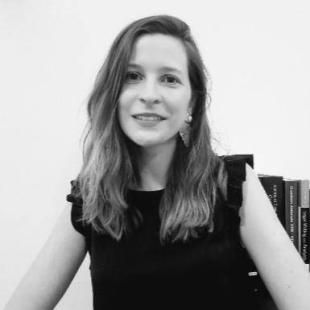

“Look for ways to contribute from your own essence. There is no need to try to fit into a mould that does not suit you. Create your own mould if necessary. Shape your own style of leadership."
María José Albrich | Gerente Legal Orica Chile & Argentina
Listen to the episode
We invite you to listen to this episode; however, if you prefer to read it, you will find a brief summary of the conversation below.
The intersection between social purpose and legal expertise
During her first year at university, María José Albrich went through a profound vocational crisis. Confronted with a discipline that seemed limited to “black-and-white texts” and the literal memorisation of legal codes, she felt her intellectual curiosity was being stifled. The system pushed her to become a repeater of rules rather than a critical thinker.
The turning point came outside the classroom. While volunteering with Techo para Chile in the district of Lampa, she discovered that law could be a vehicle for tangible social impact. By helping vulnerable people with essential administrative procedures, legal practice ceased to be an end in itself and became a “toolbox” designed to create value.
Creative “thawing”: Improvisation as a strategic advantage
When choosing her postgraduate path, María José made a disruptive decision. Instead of following the predictable route of an LLM (Master of Laws), she enrolled at NYU’s School of Professional Studies to study theatre and improvisation. In the heart of New York City, surrounded by local actors, she developed a verbal fluency that no legal seminar could have offered.
I didn’t want to do a postgraduate degree in law… I wanted to take the opportunity to study theatre in New York. It was an improvisation course that helped me completely loosen up; it was an enriching experience and, for me, it was incredible.
This training in improvisation was not a detour from her career, but an investment in adaptive leadership. The ability to read the room, adjust tone and negotiate with full presence enabled her, upon returning, to stop speaking in “legal language” and start speaking in “business”.
The internal glass ceiling: Why the “checklist” is a trap
The confidence gained on New York stages proved decisive when an opportunity arose at Orica, an international company providing solutions for mining and infrastructure. The role required a traditional academic postgraduate degree and ten years of experience; María José lacked the former and had nine and a half years of professional experience.
Where many professionals would have seen an insurmountable barrier due to risk aversion, she chose to apply. She understood that job requirements often serve as a baseline rather than a strict exclusion list. Her added value, a blend of corporate vision and communication agility, carried more weight than the missing six months of experience on paper.
María José’s leap illustrates how the “internal glass ceiling” is fuelled by the belief that we must be perfect before we allow ourselves to be candidates.
Leadership without disguises: The trap of the mould
Upon entering the mining sector, María José initially tried to adopt a rough, authoritarian tone, assuming it was the only language the industry respected. However, this “character” proved unsustainable. True empowerment came when she learned to distinguish firmness from harshness.
Being firm in one’s convictions and ensuring regulatory compliance does not require renouncing empathy or dialogue. By abandoning the mask of performative toughness, her leadership became more genuine and, therefore, more effective. Authenticity removes internal friction and allows all energy to be channelled towards strategic objectives.
Diversity at 5,000 metres above sea level
Diversity in critical industries is not a public relations exercise; it is a lever for competitiveness. A tangible example is Orica’s Operators’ School, which integrates women with no prior experience into operational roles.
At sites located nearly 5,000 metres above sea level, under extreme climatic conditions that test any human being’s physical endurance, 90% of Orica’s women at those specific locations perform operational roles. This fact not only dismantles gender biases, but also humanises corporate culture and improves financial decision-making through diverse perspectives.
Added to this is María José’s multicultural outlook: as a non-Chilean professional, her external perspective contributes an additional layer of cultural diversity that enriches conflict resolution and drives innovation in regional processes.
Extreme efficiency and the myth of domestic “help”
For María José, motherhood has not been an obstacle, but a master’s degree in resource optimisation. With limited time, proactivity becomes a biological necessity. She describes working mothers as the gold standard of corporate productivity.
If you want to learn about efficiency, that’s where it is [in women who lead and raise children]. My proactivity has increased exponentially because I need to spend less time doing the things I must do in order to do all these other thousands of things.
A fundamental pillar of this balance is genuine shared responsibility. María José emphasises that her success is possible because she has a partner who “does his part” as a parent, rather than someone who merely “helps”. High-impact female leadership requires support structures where childcare is understood as a shared responsibility, not a personal favour to women.
Conclusion: Authenticity is the highest professional ROI
María José Albrich’s final vision is a future in which inclusion is so natural that gender quotas become obsolete, a world with no “jobs for men”, but diverse talent operating within healthy, competitive markets.
Authentic leadership is not about fitting into a mould, but about having the courage to break it and create one’s own. Because, at the end of the day, authenticity is the highest form of return on professional investment.
This series is presented by the CMS Chile, CMS Colombia, CMS Mexico and CMS Peru offices, as well as FAS Advogados, in cooperation with CMS (Brazil).