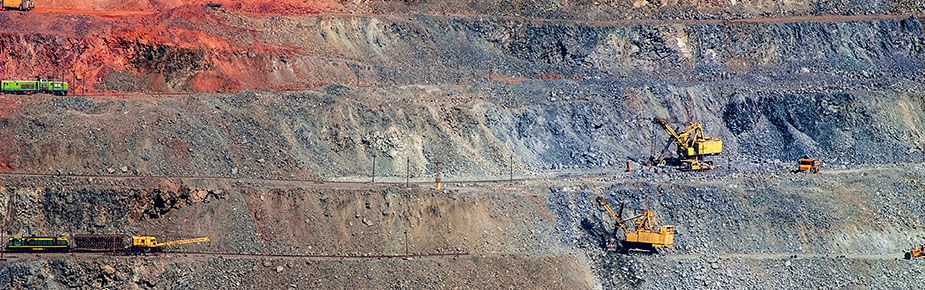


Though often under-utilised, permitted development (“PD”) rights can play a crucial role for minerals development in England, providing a framework that allows certain development activities to proceed without the need to obtain express planning permission. These rights, set out in the Town and Country Planning (General Permitted Development) (England) Order 2015 (the “GPDO”), are of significant practical importance to mineral operators.
The GPDO outlines which mineral-related activities can be carried out as PD, the conditions that apply, and the circumstances when PD rights do not apply. For mineral operators, this means that many routine or low-impact mineral operations can be undertaken more quickly and with less bureaucracy, provided they comply with the relevant rules that apply to such rights.
However, PD rights are not absolute. Article 5 of the GPDO allows a Mineral Planning Authority (“MPA”) to restrict or remove these rights in sensitive locations or where there could be significant impacts, requiring a full planning application to be made instead. This safeguard ensures that environmental, heritage, and community interests are protected where necessary.1
Whilst Article 5 directions can be applied on an “area wide” basis it is also possible for PD rights to be withdrawn through the use of planning conditions and care should be taken to ensure that PD rights have not been withdrawn in this way.
This article is intended as a summary of the key aspects of PD rights as they apply to mineral development. The information provided in this article is current as of September 2025. Practitioners should be aware that the GPDO is subject to periodic amendment, and it is essential to consult the latest version of the order and any relevant MPA guidance. Clients should contact the CMS planning team for further advice in specific situations.
Legal Framework for Minerals Permitted Development Rights
The GPDO sets out various classes of development that may be undertaken without planning permission. The relevant provisions for minerals are primarily found in Part 17 of the GPDO (mining and mineral exploration), with some additional rights under Part 6 (agricultural and forestry development). Each class of PD is subject to specific conditions and limitations, as follows2:
1. Ancillary Operations (Part 17 GPDO, Classes A and B)
CLASS A: Extension, alterations, etc. ancillary to mining operations
What is permitted?
You can build, extend, or alter plant, machinery, buildings, private roads, railways, or pipes on land used as a mine, as long as it supports the mining operations.
What is not permitted?
You cannot:
- do this on land not approved for mining, or if the main purpose is not related to mining;
- make changes that would significantly alter the appearance of the mine or build anything taller than 15 metres above ground (or higher than what is being replaced); or
- increase the size of a building by more than 25% or 1,000 square metres.
Condition(s)
Within 24 months after mining stops, all buildings, plant, and machinery must be removed unless the MPA agrees otherwise, and the land must be restored to its previous condition or as agreed.
CLASS B: Other developments ancillary to mining operations
What is permitted?
You can build, install, or alter plant, machinery, buildings, or structures on land used as a mine or on land next to it that is used for mining-related activities.
What is not permitted?
You cannot do this on land not approved for mining, or if the main purpose is not related to the mine’s operation, processing, or storage.
Condition(s)
You must get prior approval from the MPA for the siting, design, and appearance of the development. After mining ends, all such developments must be removed within 24 months (unless agreed otherwise), and the land restored.
2. Maintenance & Safety (Part 17 GPDO, Class C)
What is permitted?
You can carry out works needed to maintain or ensure the safety of a mine or disused mine, especially to keep the surface land safe.
What is not permitted?
This does not apply to works carried out by the Coal Authority or licensed coal operators.
Condition(s)
You may need prior approval for the siting, design, and appearance unless the works do not change the mine’s appearance or exceed certain size limits (no more than 15 metres high, or 25%/1,000 sqm increase in building size). The MPA can only refuse or add conditions if it is necessary to protect the local area or if the development could be sited elsewhere.
3. Waste Tipping (Part 17 GPDO, Class H)
What is permitted?
You can deposit waste from mining operations on land already used for waste tipping at a mine or on land next to it used for mining.
What is not permitted?
Unless allowed by a waste management or relevant scheme, you cannot:
• increase the height of waste above the surrounding land; or
• increase the area or height of the waste deposit by more than 10%.
Condition(s)
If required by the MPA, you must submit a waste management scheme for approval and follow it for all waste activities.
4. Mineral Exploration (Part 17 GPDO, Classes J and K)
CLASS J: Temporary use of land for mineral exploration
What is permitted?
You can use land for up to 28 days for mineral exploration, such as drilling boreholes, seismic surveys, or making excavations, and put up temporary structures needed for these activities.
What is not permitted?
You cannot:
- drill for petroleum;
- work within 50 metres of homes, hospitals, or schools;
- operate in protected areas (like National Parks or Sites of Special Scientific Interest); or
- use large explosive charges, make deep or large excavations, or put up tall structures.
Condition(s)
You cannot carry out work between 6pm and 7am and trees must not be harmed unless agreed. After 28 days, all structures and waste must be removed, boreholes sealed, excavations filled, and the land restored to its previous state.
CLASS K: Use of land for mineral exploration
What is permitted?
You can carry out mineral exploration (drilling, surveys, excavations) and put up temporary structures, provided you notify the MPA in advance.
What is not permitted?
You cannot:
- drill for petroleum;
- use large explosive charges;
- make deep or large excavations; or
- put up tall structures.
You must notify the MPA and wait for the relevant period to pass before starting.
Condition(s)
Work must follow the details in your notification and trees must not be harmed unless agreed. After work ends, all structures and waste must be removed, boreholes sealed, excavations filled, and the land restored. The development must finish within 6 months after the notification period, unless otherwise agreed.
5. Removal of Material (Part 17, Classes L and M)
CLASS L: Removal of material from a stockpile
What is permitted?
You can remove material from a stockpile of minerals that have been deposited for processing or sale.
There are no specific exclusions or conditions listed.
Clas M: Removal of material from mineral-working deposits
What is permitted?
You can remove material from a mineral-working deposit (not a stockpile), provided you notify the MPA in advance.
What is not permitted?
You cannot do this if the deposit covers more than 2 hectares (unless it is less than 5 years old), or if the deposit comes from certain other permitted developments. You must notify the MPA and provide details before starting.
Condition(s)
Work must follow the details in your notification. If required, you must submit a restoration and aftercare scheme and follow it. You cannot start development until the relevant period has passed.
6. Mineral Working for Agricultural Purposes (Part 6 GPDO Class C)
What is permitted?
You can extract minerals (such as sand, gravel, or clay) from land that you own or use for agriculture, as long as the minerals are needed for agricultural purposes on that land or other land you farm.
What is not permitted?
You cannot carry out excavations within 25 metres of a main or classified road. Minerals extracted cannot be moved off the land except to other land you farm and use for agriculture.
Condition(s)
Any minerals taken must only be used for agricultural purposes on your own land or other land you farm. You cannot sell or use them elsewhere.
Restriction of Permitted Development Rights: Article 5 GPDO Directions
Article 5 GPDO is a safeguard that allows MPAs to control mineral developments in sensitive or high-impact locations by restricting certain permitted development rights for minerals to ensure that environmental, heritage, and community interests are protected. This means that, in specific circumstances, the automatic right to carry out certain mineral-related developments without planning permission can be removed, requiring a full planning application instead.
When can Article 5 be used?
Article 5 can be applied to development under Classes K, KA, and M of Part 17 of the GPDO. The MPA may issue a direction to restrict permitted development rights if they believe it is necessary for one or more of the following reasons:
- The land is within a protected area, such as a National Park, Area of Outstanding Natural Beauty, site of archaeological interest (unless exempted), Site of Special Scientific Interest, or the Broads.
- The development, either alone or combined with other similar developments, would seriously harm the amenity of the area or the setting of a Grade I listed building.
- The development would cause a serious nuisance to people living in nearby homes, or to hospitals or schools.
- The development would endanger aircraft using a nearby aerodrome.
How does the Article 5 process work?
- If the MPA decides to restrict PD rights, they must issue a direction within 21 days of receiving notification of the proposed development.
- The direction must state when it comes into force (usually 29 days after being sent to the Secretary of State).
- The MPA must send a copy of the direction to both the Secretary of State and the person who notified them of the development.
- The Secretary of State has 28 days to disallow the direction. If the direction is disallowed, the developer is notified and can proceed with the development as permitted.
- If the direction is not disallowed, the permitted development right is removed for that proposal, and planning permission must be sought.
What does this mean for mineral operators?
A local authority search will reveal if an Article 5 direction is in place, including details of the restriction and where to find copies. Importantly, Article 5 of the GPDO does not permanently remove the ability to carry out the development, it simply means that planning permission must be obtained first.
Withdrawal of PD rights by condition on a planning permission
Local planning authorities may withdraw PD rights through planning conditions on a planning permission. Indeed some MPAs do so as a matter or course, and it is important to ensure that no such conditions have been imposed on any permissions relating to land where PD is intended to be relied on.
Summary
Permitted development rights for minerals provide a valuable mechanism for facilitating certain mining and minerals-related activities without the need for express planning permission. However, the regime is complex, with detailed conditions and exclusions that need to be carefully considered, and with the potential for MPA intervention. Mineral Operators must ensure careful compliance with the GPDO and remain alert to the possibility of Article 5 GPDO directions and other local restrictions, such as the withdrawal of PD rights through the use of planning conditions. Early engagement with the MPA and professional advice are strongly recommended to navigate the PD regime successfully.
For further information or advice on minerals planning and permitted development rights, please contact Chris Bowes or Chris Devitt.
This article was co-authored by Abi Hill, Trainee Solicitor at CMS.