- Do EPCs need to be provided on sales and lettings and if so, are there any statutory minimum requirements?
- Is there any legislation requiring new or existing buildings to satisfy ESG requirements?
- How widespread are green lease provisions? Are they regulated or market driven? What areas do green leases commonly cover? Do they apply to both residential and commercial leases?
- What do institutional investors and banks/other financing institutions require in terms of the green lease drafting? Is there any market standard approach to green lease drafting? Do you report on the lack of any green lease provisions in your due diligence reports on an acquisition or refinancing?
- How are green lease provisions enforced?
- How widespread is the certification of buildings (e.g. LEED, BREEAM, NABERS, WELL etc.)? Are they regulated or market driven? How is this documented between the Landlord and Tenant?
- Are there any additional regulatory requirements that need to be met or contractual provisions that need to be considered regarding the installation of alternative energy supply systems (e.g. rooftop photovoltaic systems)?
- Are there any regulations relating to soil artificialisation or other biodiversity concerns which impact on new builds and/or refurbishments? How are they enforced?
jurisdiction
1. Do EPCs need to be provided on sales and lettings and if so, are there any statutory minimum requirements?
EPCs must be issued for new buildings, buildings undergoing major renovations, and buildings that are sold or rented out. The certificate provides a rating of the building's energy efficiency and is mandatory for transactions. EPCs detail the energy performance of a building, recommendations for improvement, and an indication of the potential savings that could be made by implementing the recommendations. EPCs rate buildings on a scale from A (very efficient) to G (inefficient), based on their energy consumption. Buildings are required to achieve a certain minimum rating to be compliant. The exact requirements can vary depending on the type of building (e.g., residential vs. commercial, new build vs. existing). For new buildings, the Czech Republic follows the EU directive requiring that all new buildings constructed after 2020 be Nearly Zero-Energy Buildings (NZEB), with a very high energy performance where the nearly zero or very low amount of energy required should be covered to a significant extent by energy from renewable sources. When existing buildings undergo major renovations, the renovated parts must meet minimum energy performance requirements. This includes improving the thermal insulation of the building envelope and updating heating, cooling, and lighting systems to more energy-efficient models.
2. Is there any legislation requiring new or existing buildings to satisfy ESG requirements?
The Energy Performance of Buildings Directive (EPBD) requires that all new buildings must be nearly zero-energy buildings since 2021 (public buildings since 2019).
3. How widespread are green lease provisions? Are they regulated or market driven? What areas do green leases commonly cover? Do they apply to both residential and commercial leases?
Green leases are becoming more common in the Czech Republic, driven primarily by market demand rather than regulation. These leases typically cover energy efficiency, water conservation, waste reduction, and indoor environmental quality. Green lease provisions are more prevalent in commercial leases, less in residential settings. Green lease provisions are not specifically regulated but are increasingly adopted by parties seeking to improve building sustainability.
4. What do institutional investors and banks/other financing institutions require in terms of the green lease drafting? Is there any market standard approach to green lease drafting? Do you report on the lack of any green lease provisions in your due diligence reports on an acquisition or refinancing?
Institutional investors and financing institutions in the Czech Republic are showing a growing interest in green lease provisions as part of their environmental and sustainability criteria. While there is no single market standard for green lease drafting, best practices include clauses on energy efficiency, resource conservation, and sustainability certifications. Due diligence may review the presence or absence of green lease provisions during acquisitions or refinancing, but it is not yet a market standard.
5. How are green lease provisions enforced?
Enforcement of green lease provisions typically relies on contractual agreements between landlords and tenants, with legal recourse available for non-compliance.
6. How widespread is the certification of buildings (e.g. LEED, BREEAM, NABERS, WELL etc.)? Are they regulated or market driven? How is this documented between the Landlord and Tenant?
Building certifications such as LEED, BREEAM, WELL, and others are increasingly popular and common in the Czech Republic, driven by market demand for sustainable and efficient building practices. These certifications are often documented in lease agreements or building management policies, detailing the responsibilities of landlords and tenants in maintaining certification standards.
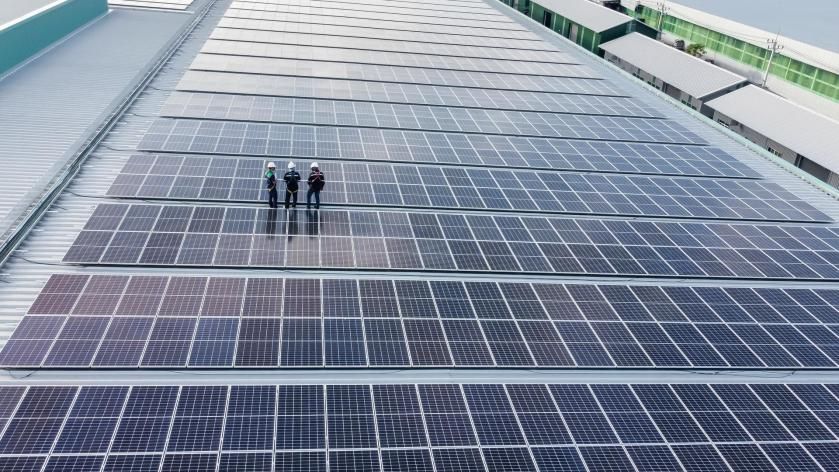
7. Are there any additional regulatory requirements that need to be met or contractual provisions that need to be considered regarding the installation of alternative energy supply systems (e.g. rooftop photovoltaic systems)?
Regarding alternative energy supply systems like rooftop photovoltaic systems, specific regulations may apply, but there isn't comprehensive legislation. Installation considerations would include compliance with building codes and potential grid connection requirements.
8. Are there any regulations relating to soil artificialisation or other biodiversity concerns which impact on new builds and/or refurbishments? How are they enforced?
Regulations related to soil artificialization or biodiversity concerns impacting new builds or refurbishments are present but not extensive. Enforcement typically falls under environmental or planning authorities, ensuring compliance with relevant laws and regulations. Recently, the Czech Government accepted a significant amendment to the existing environmental legislation, which aims to encourage the development of brownfield and lower quality land while protecting the highest quality agricultural land. The development of large warehousing and retail projects on the highest quality agricultural land will be prohibited, and the price for developing such projects on lower quality land will increase notably.