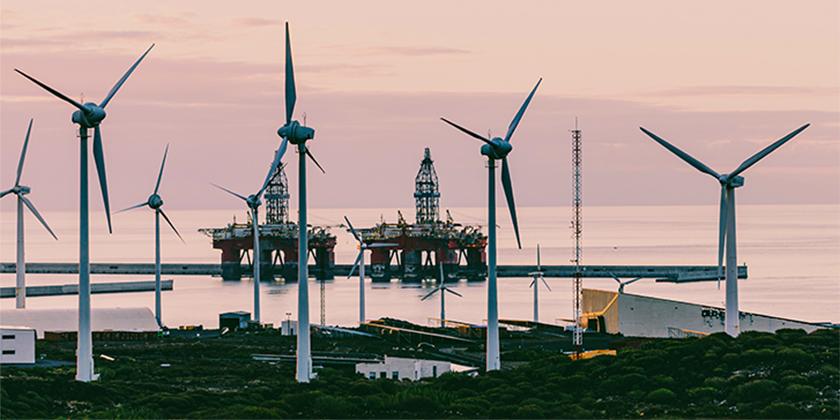
Land is a finite resource. As the world collectively pushes towards achieving Net Zero targets, more and more land will need to be used for renewable energy projects, including solar farms, wind farms, hydrogen production and storage, interconnectors, more electricity network infrastructure, new gas pipelines and networks, hydroelectric and battery storage projects. There is a substantial increase in the number of projects coming forwards and needing land, which is creating significant tension with other land uses, such as farming and housing, which are also essential to society.
Unlike traditional generation, such as coal or gas-fired power stations, it is usually not possible to locate renewable generation next to or in proximity to the areas of highest demand. For example, there is a high level of renewable energy generated by offshore wind in Scotland, but there is more power being generated than can be used by Scotland. This creates a need for significant new distribution networks and infrastructure to transport the electricity generated to where it is most needed.
In relation to countries with a coastline, there are often a limited number of suitable landing points onshore for offshore subsea cables, such as electrical interconnectors or cables connecting offshore windfarms to the onshore national electricity networks. This land limitation has been recognised by various governments, including the UK, who have provided guidance requiring neighbouring or proximate offshore projects to co-ordinate in relation to their onshore infrastructure and connection needs. This coordination has the significant advantage for both the environment and for local landowners of causing less disruption and disturbance to the land. By way of example, if one project is able to install ducting for underground cables that can also be used by another project in the future, then the land will only need to be opened once with one period of construction, as opposed to twice if two cable ducts were used.
However, the requirement to coordinate can create various challenges. The projects may be working to very different programmes and deadlines. Landowner negotiations will need to be coordinated between the projects, often resulting in tripartite option agreements which throws up further issues. For example, the length of option period sought will need to be carefully considered in the context of two projects with different programmes. The existence of different programmes also creates issues in relation to funding of works that are for the benefit of both projects. Does the lead project pay, for example, for the ducting works in the anticipation that the project following on will then reimburse its share of expenditure for these works at an unknown future point?
Projects may also have different financing structures and requirements as well as appetite to risk. A balance sheet funded project may be in a position to take a different negotiating position with landowners than one which is being project financed. One project may have deeper pockets than another, again resulting in tensions around a suitable level of payments to landowners to secure the required land rights for each project.
Although we cannot conjure up more available land, we can look to use existing land more efficiently from a renewables generation and storage perspective. Many organisations, partly spurred by the rising importance and understanding of ESG issues at board level, are looking to “green” any land or buildings they own, resulting in a surge in interest in on-site renewables. This is frequently taking the form of solar panels being installed on existing rooftops, often in combination with the installation of battery storage. Alternatively, if installing new generation is not an option, organisations are looking at signing up to renewables Power Purchase Agreements so that the electricity they are using has been generated by renewable sources.
In summary, land as a resource is coming under increasing pressure for renewables projects and we need to find innovative solutions to share and use land in ways that were not previously contemplated. The regulatory and legislative frameworks will also need to evolve to support these solutions.